Calgary Commercial Cap Rates

Live Market Data for Office, Industrial, Retail and Multifamily Investors

Calgary commercial cap rates move differently depending on which sector you're looking at, and treating the market as one number is how investors overpay. This page tracks Calgary commercial cap rates across the four core asset classes: office, industrial, retail and multifamily using current capital markets data, so you can see where yields are compressing, where they're expanding, and what that means for your next offer. Whether you're comparing Calgary commercial properties, evaluating an apartment building, or sizing up an industrial property for sale, this is the data to check before you write an offer.

Calgary Commercial Cap Rates: 2026 Market Snapshot

Sector Current Market Cap Rate 5-Year Change (2021–2026 YTD)
Office 12.1% +2.6 pts
Industrial 6.9% +1.2 pts
Retail 6.7% +1.0 pts
Multifamily 5.2% +0.8 pts

Cap Rates & ROI in Alberta

Forgot password Extend Verify Contact
No listings found.
Data was last updated November 11, 2026 at 02:05 PM (UTC)

Why Calgary Commercial Cap Rates Are Moving the Way They Are in 2026

Industrial · Multifamily · Office · Retail Trends

Industrial Momentum

Two consecutive years of transaction growth and a stabilizing cap rate around 6.9% make industrial the strongest-performing segment of Calgary's commercial market right now. Logistics operators, contractors and owner-users continue to drive demand for industrial property for sale in Calgary, particularly in the NE and SE submarkets.

No Rent Control Keeps Multifamily Cap Rates Tight

Alberta's lack of rent control legislation continues to make Calgary apartment-building commercial real estate attractive to private investors seeking predictable income growth alongside the city's population growth, even with 2026 YTD multifamily transaction volume down 19.5%. Population growth of 13.1% over the past three years and a median household income of $114,200, the highest of any major Canadian metro, continue to support the underlying rental demand behind that pricing.

Office Is Repricing, Not Stalling

A 12.1% market cap rate looks alarming next to industrial or multifamily, but the 55.9% YTD jump in office sales volume shows buyers are actively transacting at these levels; this is a market finding its floor, not one that's frozen.

Retail Stays the Boring, Reliable Middle

Calgary commercial cap rates in retail have moved the least of any sector over the past five years, which is exactly what you'd expect from a segment anchored by grocery and service tenants with long-term leases.

How to Calculate and Use a Cap Rate

Cap Rate = Net Operating Income (NOI) ÷ Purchase Price.

Before comparing any listing to the Calgary commercial cap rates above, calculate NOI from verified financials: gross income minus vacancy allowance and operating expenses, excluding debt service, then divide by the asking price. If your number sits meaningfully below the current range for that asset type, you're likely paying a premium for location, tenant quality, or building condition. If it sits above the range, dig into why: deferred maintenance, a short remaining lease term, or elevated vacancy risk are the usual culprits.

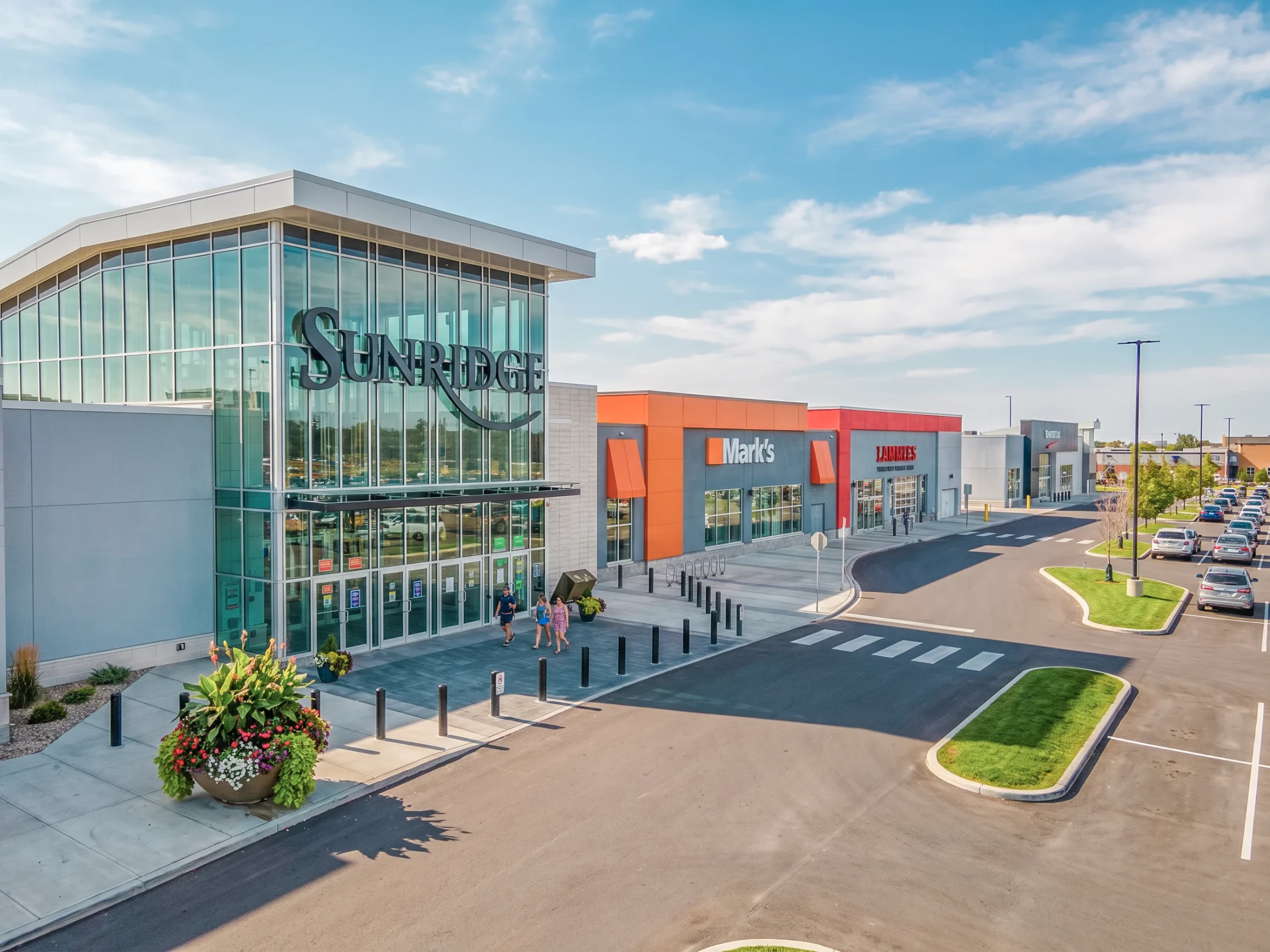
Sunridge Mall Retail

Frequently Asked Questions

What are the current Calgary commercial cap rates by property type?

As of 2026, Calgary commercial cap rates sit at approximately 12.1% for office, 6.9% for industrial, 6.7% for retail, and 5.2% for multifamily, based on current capital markets data. These are market-wide averages; individual asset pricing varies by location, building quality, and tenant covenant.

Why are Calgary commercial cap rates so much higher for office than other sectors?

Office cap rates have expanded from 9.5% in 2021 to 12.1% today because buyers are pricing in real leasing risk from elevated downtown vacancy, not just current income. Even so, office sales volume is up 55.9% year-to-date, showing active repricing rather than a frozen market.

Are Calgary commercial cap rates higher than Toronto or Vancouver?

Yes, particularly in multifamily. Calgary multifamily investment yields typically run 4.75% to 5.25%, which is 50 to 100 basis points above comparable assets in Vancouver and Toronto, offering more income per dollar invested at a lower entry price.

Which Calgary commercial sector has the most stable cap rates?

Retail and multifamily have shown the least year-over-year movement over the past five years. Multifamily in particular has held close to 5.2% to 5.3% since 2023, supported by Alberta's lack of rent control and continued population growth.

How is a market cap rate different from a transaction cap rate?

A market cap rate is a broader, model-based estimate reflecting overall pricing trends across an asset class, while a transaction cap rate reflects the actual yield on a specific closed sale. Always verify a specific deal's cap rate against recent comparable transactions, not just the market average.

Data is supplied by Pillar 9™ MLS® System. Pillar 9™ is the owner of the copyright in its MLS®System. Data is deemed reliable but is not guaranteed accurate by Pillar 9™.
The trademarks MLS®, Multiple Listing Service® and the associated logos are owned by The Canadian Real Estate Association (CREA) and identify the quality of services provided by real estate professionals who are members of CREA. Used under license.